Phone : +91 80 26743050
Email Id : info@purnapramati.in
Recent Updates
Subscribe
The Journey
To pursue our motive to bridge the gap between wisdom and modern advancements, we have formed a value-centered professional and committed team, Satyatirtha, with a motto: Truth-seeking, Capable and Caring People Striving for Social Good.
The team launched its first initiative Mission Man-e-Script in 2006-07. The mission primarily focuses on research and publication of Saṁskṛta philosophical literature. Purnapramati is another initiative of Satyatirtha Foundation® (a non-profit organization) for integrated learning.
The Inspiration
The Indian heritage personified in great sages like Vālmīki and documented in the epics like the Mahābhārata is the primary inspirational force for Satyatīrtha Foundation. The life and works of Ānandatīrtha, a 13th-century philosopher par excellence, are the driving force behind our pursuit of this path.
Śrī Śrī Viśveśa Tīrtha Svāmiji of Pejāvara Adhōkṣaja Maṭha Udupi in his speeches, envisioned the future of education as one that provides modern awareness along with Śāstrīya scholarship so as to rebuild the nation. This vision seeded the idea of Pūrṇapramati in the minds of our team. Svāmiji’s śiṣyas, such as Satyanārāyaṇa Ācārya ji from Pūrṇaprajña Vidyāpīṭha, Bengaluru encouraged us to begin this initiative in the field of adhyayana–adhyāpana by establishing a pāṭhashālā.
The Trigger
In the year 2006 C.E., our team felt the need to provide critical editions of scriptures for Ācāryas and scholars by working on manuscripts so as to preserve our knowledge traditions. This project was named the Likucha Project. However, it was felt that only one section of society would benefit from this effort, and there was doubt about whether there would be takers of our age-old traditions in the future. Thus, cultivation from a tender age was considered essential. In the modern lifestyle, where the ideal kuṭumba atmosphere that nurtures a conducive environment for sacred knowledge systems is becoming increasingly rare, it was felt that education along with traditional sensibility should be imparted to society from an early age.
The Research
A comprehensive and detailed study of various gurukulas, alternative educational institutes, and other educational initiatives throughout India was carried out over four to five years. There was an intention to begin this endeavor in the lap of nature, on the banks of a pious river. However, Svāmiji deliberately instructed us to seed this idea in the very centers of cities, as such noble education is even more needed in these areas.
& Finally
An abhiyana for admissions to such educational establishment was started and in the year of 2010 C.E., first paṭhāshalā was started with 18 students and 4 adhyāpakas in a rented house in Girinagara, Bengaluru. Every year added a new flavour to this journey, people started supporting by all means and both academics and pedagogy developed organically.
The Forming
Śikṣaṇa began with a classroom model having 15 students per class, similar to the center-based systems in universities. In this model, students would move from one center (such as Science, Maths, etc.) to another. However, this model required a significant amount of physical material to manage multi-age groups of children. To implement this effectively, it was felt that training in the Montessori system might help provide insight into handling multi-age groups, adopting an open environment, and encouraging activity-based learning.During and after COVID-19 pandemic, even this model proved ineffective.
We then returned to the textbook method, but with one-on-one student–teacher attention. Eventually, we reached the conclusion that the time-tested Gurukula model of education, developed by our ancestors and scholars over the ages, is the only sustainable way forward. In this model, we are not dependent on excessive and expensive study materials; moreover, education is possible even in the absence of extensive physical systems and materials.
Exactly at that time NEP 2020 was formulated by the Central Government and this Framework was very much close to our own vision and idea of Education. The NCF team that developed NEP trained our teachers in technical aspects of curriculum development such as assessment, defining learning outcomes, etc.
Since then, we are efficiently working with a mixed age group, open environment model. NCERT and other study material prepared by our own team has been adopted
Purnapramati evolved through theme-based learning categorized broadly under the heads: Prakṛti, Saṃskṛti, and Adhyātma – chosen for focus each academic year in a manner as to re-visit them periodically.
Learning Through the Year: The Samvatsara Sūtra
Rather than dividing knowledge into isolated subjects, learning at Pūrṇapramati began to move through Samvatsara Sūtra : a year-long thematic thread that shaped thought, action, reflection, and experience.
Each academic year chose a single, foundational theme, broadly located within the domains of Prakṛti, Saṃskṛti, and Adhyātma. These themes were not chosen for novelty. They were chosen because they quietly govern our lives: rivers, family, food, justice, economy, ecology, devotion, and duty.
The theme of the year did not remain confined to textbooks. It found expression in everyday life at Pūrṇapramati.
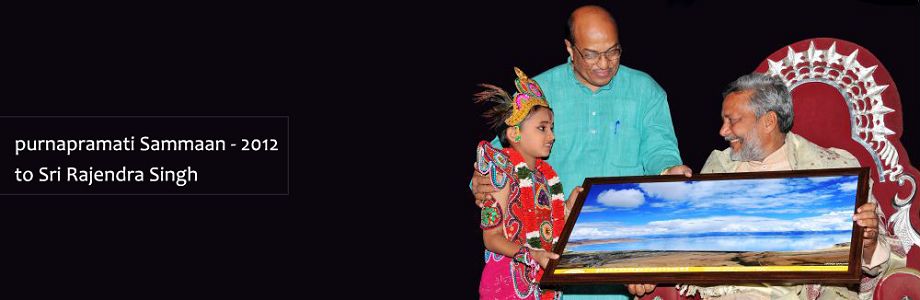
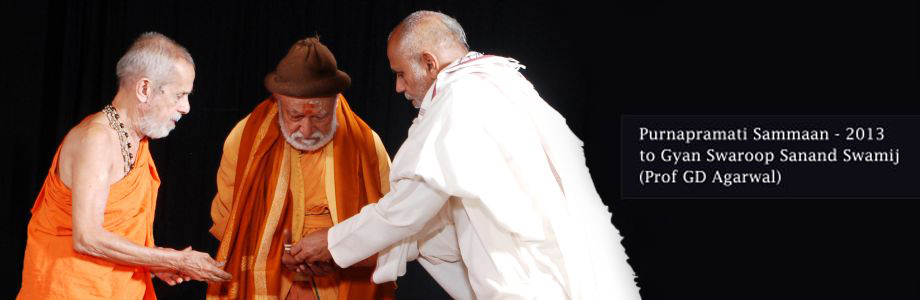
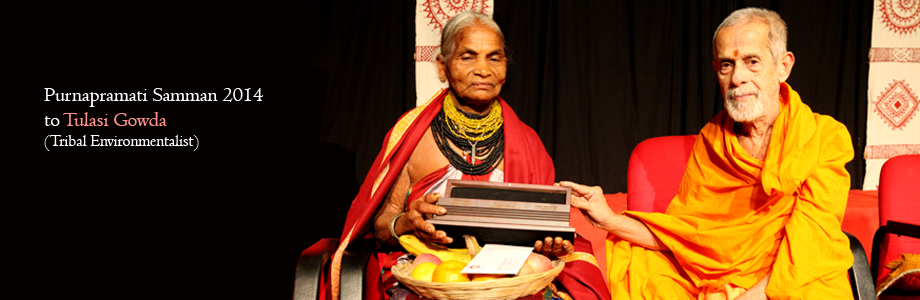
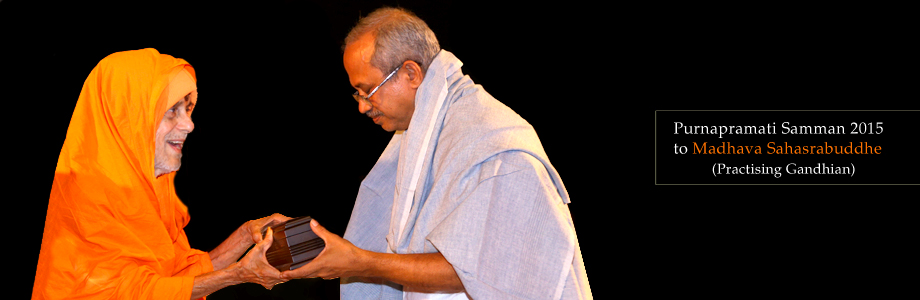
The theme gets reflected in activities like Parvadina-s (festivals), Annual Mahotsava that involved honouring people (Sammāna), students’ performances in the events and through as part of the Mahotsava, a Seminar (Vyākhyā) in relation to the theme is also organised every year.
This is an effort that connects students with practitioners in the world and to learn from their wealth of experience.
In some instances, these have also resulted in substantial learning through engagement with their efforts and examples include collaborations with experts lead to hands-on projects like the Kumudavati river rejuvenation and to bring to attention the purpose and message of Śrī Jñānasvarūpa Sānanda Svāmīji’s
Gaṅgā Tapasyā to imbibe that spirit in one’s learning, to think and honour adhi-daivata dhāraṇa (~sense of the sacred) in every aspect of life.
Learning That Became Experience
The chosen theme unfolded through Parvadina-s (festivals), daily conversations, classroom explorations, field visits, and long reflections. Each year culminated in the Annual Mahotsava, where learning took visible form.
Students presented performances, exhibitions, and reflections. Individuals and communities who had dedicated their lives to the theme were honoured through Sammāna, not as symbolic gestures, but as acknowledgements of lived wisdom.
Alongside this, an annual Vyākhyā (seminar) was organised, inviting scholars and practitioners to deepen the theme intellectually and experientially. These moments connected students with the world beyond the institution, allowing learning to flow both inward and outward.
Over time, some engagements moved beyond learning into participation.
Collaborations with practitioners led to hands-on work, such as the Kumudavati river rejuvenation, where students encountered ecology not as theory, but as responsibility. Similarly, the life and message of Śrī Jñānasvarūpa Sānanda Svāmījī’s Gaṅgā Tapasyā became a living inspiration, cultivating an adhi-daivata dhāraṇa, a sense of the sacred that quietly informs every aspect of life.
Themes That Shaped the Years
Each year left behind a trace, shaping both understanding and character:
- 2011–12: Kouṭumbika Maulyagalu — exploring family as the first space of values
- 2012–13: Jalam Jīvanam Ucyate — rivers as life-giving systems
- 2013–14: Jīvo Jīvasya Jīvanam — interdependence in nature
- 2014–15: Integrated Learning — strengthening academic foundations
- 2015–16: Roti–Kapada–Makān — food, clothing, shelter, and livelihoods
- 2016–17: Paramparā Bīja Rakṣā — protecting living traditions
- 2017–18: Bhakti — exploring the ninefold paths of devotion
- 2018–19: Gaṅgā — engaging with her many dimensions
- 2019–20: Daśapramati — Haridāsa Sāhitya
- 2020–21: Rāmāyaṇa — its many-layered civilizational meanings
- 2021-22: Bhagavata – Bhagavata Dharma
- 2022-23: Rama Mandira to Ramarajya (Ramarajya at Individual, Kutumba, Gurukula, Samaja, Rasthra)
- 2023-24: Rama Mandira to Ramayaraja (Gurukula Shikshana)
- 2024-25: Rama Mandira to Ramarajya
These were not chapters completed and closed. They were cycles, revisited again and again as students grew older and understanding matured.
A Journey Still Unfolding
What began with a few students and adhyāpaka-s has slowly become a learning community that remembers something essential: education is not about accumulation, but alignment. Alignment between thought and action. Between knowledge and responsibility. Between tradition and the present moment.
Pūrṇapramati continues to walk this path, guided by paramparā, shaped by experience, and sustained by trust, knowing that true learning is never finished. It only becomes deeper.